
Workout
10 Week Program & 5,000 Rep Arm Specialization Program

Have you been familiar with the 10-week program & 5,000 rep arm specialization program? This will make you go insane, but in a good way. The highlight of this program is in alternating between cruise and blast weeks. In the end, you will perform about 5,000 reps throughout ten weeks.
Description of The Workout:
This program is designed to beef up your triceps and biceps. That is why you need to understand it, as it may seem helpful and valuable for your part. Remember as well that specialization programs have already been around forever.
Vince Gironda, a bodybuilding legend, said that rules are designed to be questioned, broken, changed, or challenged. And there is no wrong way or right way to work out.
In this sense, it is finally about time to break the rules. If you aim for bigger arms, this 10-week Arm program will be beneficial if it is packed with lots of sleep and food.
Must Read Our Article: 18 Week Chin Up & Dip Program for An Impressive Upper Body
Summary of The Workout:
To make things easier on your part, consider taking a closer look at the summary below:
- Main Goal─ Building Muscle
- Workout Type─ Single Group of Muscles
- Training Level─ Intermediate
- Duration of the Program─ Ten Weeks
- Days every Week─ Three
- Time every workout ─ Sixty to Seventy-Five Minutes
- Equipment Needed─ EZ Bar, Machines, Dumbbells, Cables, Bodyweight, and Barbell
- Target Gender─ Female and Male
- Supplements Recommended─ Multivitamin, Casein Protein, Pre-Workout, and Whey Protein.
 Click Here to Buy Ostarine from Etalaze
The Rules:
There are specific rules that you will need to consider mind that, include the following:
Blast and Cruise:
In the ten weeks, you will need to alternate between cruise weeks and the last weeks. The latter will involve three arm-building workouts, including super-high volume.
Now, with cruise weeks, they are indeed very much challenging. The frequency will need to be dropped to about two workouts. The session will involve a volume that is cut in half.
- Cruise Weeks. This will include two workouts performed only on Monday and then on Thursday. The total repetitions will fall at precisely 125 for every workout.
- Blast Weeks. This will include three workouts performed on Monday, Wednesday, and Friday. The total repetitions will fall at precisely 125 for every workout.
Other Essential Things to Keep in Mind:
In this program, you must minimize all other guys, including the legwork, shoulder, back, and chest. You will not dedicate yourself to doing a lot of sets for every muscle group. In addition to that, you will not need to eat protein-enriched foods.
You will need to devote eating at least two-hundred grams of protein every day. If you eat just a minimum of two-hundred twenty grams every day, it will be a lot better.
In addition to what you need to keep in mind in the program, you must slap on your feedbag. Eat a whole lot more. Stick to five-hundred calories and just no less. If you think that you are still hungry, eat some more. Remember that food is equal to growth, and food is equal to recovery.
Workouts on a Blast Week:
- On a Monday, you will need to work on your chest, arms and shoulders. The exercises include bench press, pec dec, military press, and side lateral raise. The arm work will include lying triceps extension, rope cable curls, close grip bench press, and dumbbell curls.
- On a Wednesday, you will also need to concentrate on working on your arms and legs. The exercises include leg curls, seated calf raises, leg extensions, and squats. Before the arm work, this will include hammer curls, dumbbells kickbacks, EZ bar curls, French press, and bench dips.
- On a Friday, you will need to focus on working on your arms, traps, and back. The exercises will include deadlifts, barbell rows, v-bar pulldowns, and barbell shrugs. The arm work will also consist of state press, barbell curls, machine curls, and dumbbell tricep extensions.
Workouts to Consider on a Cruise Week:
- On a Monday, you will need to concentrate further on your arms, chest, and shoulders. The exercises to follow include bench press, pec dec, military press, and side lateral raise. Before the arm work, it will include dumbbell curls, cable tricep extensions, and a close grip bench press.
- On a Thursday, you will need to focus on working on your arms, legs, and back. The exercises to implement will include leg curls, squats, barbell rows, and v-bar pulldowns. The arms work will include weighted chin-up, lying tricep extensions, and EZ bar curls.
The Attitude in Engaging in The Program:
In order to become successful in following this program, it is essential keeping in mind discipline and hard work. No gain without pain will always apply in this routine. It will now be up to you if you are determined enough to achieve good results in the end.
Related Article Must Read: Ultimate Arms: How to Build Sleeve-Splitting Biceps and Triceps
Conclusion:
Follow the 10-week and 5000 rep arm specialization programs to focus on achieving better arms. In this regard, never question yourself about sanity. 5,000 reps will always be 5,000 reps. There is no need to hesitate further about this.







For decades, the gym floor has echoed with the thud of cushioned sneakers, lifting shoes, and high‑tech trainers promising better stability, more power, and improved performance. Yet in recent years, a surprising shift has taken hold among serious lifters: many are kicking off their footwear entirely. What began as a fringe practice—often dismissed as quirky or unsafe—has evolved into a growing movement embraced by bodybuilders, powerlifters, and functional fitness athletes who swear that training barefoot unlocks a deeper, more natural kind of strength.
At first glance, the idea seems almost counterintuitive. After all, modern athletic shoes are engineered with layers of support, padding, and structure. But that’s exactly the point. As lifters push for better technique, stronger lifts, and more efficient movement patterns, many are realizing that all that cushioning may be doing more harm than good. By removing the barrier between foot and floor, barefoot training forces the body to engage stabilizing muscles that shoes often mute. The result? A stronger foundation, improved balance, and a more connected kinetic chain from the ground up.
Beyond performance, the barefoot trend taps into a broader shift toward natural movement and functional strength. Lifters are rediscovering the importance of foot mechanics—how the toes grip, how the arches support, and how the ankles align. These subtle details influence everything from squat depth to deadlift power. And as more athletes experiment with barefoot sessions, they’re finding that the benefits extend far beyond the feet themselves.
Of course, going shoeless in the gym isn’t just about following a trend. It’s about rethinking how we build strength, questioning long‑held assumptions, and exploring what happens when we strip training back to its most primal form. Serious lifters aren’t throwing away their shoes for style—they’re doing it for results.
Click Here to Buy Ibutamoren 50 Tabs by BodyTech
Advantages of Training Barefoot for Pro Bodybuilders
For professional bodybuilders, every detail matters—how the body moves, how muscles fire, and how efficiently force transfers through the kinetic chain. Training barefoot has emerged as a surprisingly effective way to refine these details and unlock performance benefits that shoes often mask.
One of the biggest advantages is enhanced stability. Without the interference of thick soles or elevated heels, the feet can spread naturally, creating a wider, more grounded base. This stability is crucial during heavy compound lifts like squats, deadlifts, and lunges, where even minor wobbling can compromise form or reduce power output. Barefoot training allows bodybuilders to feel the floor directly, improving balance and control under load.
Another major benefit is greater activation of stabilizing muscles, especially in the feet, ankles, and lower legs. Modern footwear often restricts natural movement, causing these smaller muscles to weaken over time. Training barefoot forces them to engage, strengthening the foundation that supports every lift. For bodybuilders, this translates to better joint integrity, improved symmetry, and reduced risk of chronic overuse injuries.
Barefoot lifting also enhances proprioception—the body’s ability to sense position and movement. With more sensory feedback from the ground, athletes can fine‑tune their technique, adjust their stance, and maintain optimal alignment throughout each rep. This heightened awareness can improve squat depth, deadlift mechanics, and overall lifting efficiency.
Must Read: The Proper Approach to Buying Steroids Online (updated)
Additionally, training without shoes encourages more natural biomechanics. The feet move freely, the arches function as intended, and the ankles maintain a neutral position. This can help correct imbalances caused by years of training in restrictive footwear, ultimately supporting better long‑term performance.
For pro bodybuilders chasing marginal gains, barefoot training offers a simple yet powerful way to build strength from the ground up—literally. It’s not just a trend; it’s a strategic tool for maximizing muscle engagement, improving technique, and enhancing overall athletic longevity.
Possible Downsides of Lifting Barefoot
While barefoot training has gained popularity among casual lifters for its “natural” feel and improved ground contact, the situation is very different for professional bodybuilders. At elite levels, athletes handle extreme loads that demand maximum stability, protection, and performance efficiency. Without proper footwear, the risks multiply — from injuries and reduced leverage to hygiene concerns and long-term joint stress. The following points highlight why barefoot lifting can be problematic for pro bodybuilders.
1. Reduced Foot Protection
Bare feet leave you vulnerable to dropped weights, sharp objects, or heavy equipment. For pro bodybuilders handling massive loads, this risk is amplified.
2. Higher Risk of Injury
Without shoes, the bones, tendons, and ligaments in your feet absorb more stress. Heavy squats or deadlifts can easily cause sprains or fractures.
3. Lack of Arch Support
Shoes provide structural support that helps prevent issues like flat feet or plantar fasciitis. Barefoot lifting removes that safeguard.
4. Instability Under Heavy Loads
Gym floors can be slippery or uneven. Shoes add grip and stability, while barefoot training increases the chance of wobbling or losing balance.
Related Article: Muscle Density Decoded: Why Hardness Beats Size
5. Reduced Performance in Certain Lifts
Olympic lifts and squats often benefit from raised heels or firm soles. Barefoot training limits leverage and can reduce maximum output.
6. Increased Stress on Ankles and Knees
Without cushioning, impact forces travel directly into the joints. Over time, this can contribute to chronic pain or injury.
7. Hygiene Concerns
Gyms are breeding grounds for bacteria and fungi. Training barefoot raises the risk of infections like athlete’s foot.
8. Limited Leg Drive in Deadlifts
While barefoot deadlifting improves ground contact, it reduces leverage compared to specialized lifting shoes designed for maximum force transfer.
9. Not Competition-Ready
Most bodybuilding and powerlifting competitions require footwear. Barefoot training doesn’t translate well to actual performance standards.
10. Potential Long-Term Damage
Repeated barefoot lifting under heavy loads can cause chronic foot problems, misalignment, and reduced career longevity.
Overall
As we mentioned earlier, training barefoot has become a trend among some athletes, but for professional bodybuilders the practice carries both potential benefits and serious drawbacks. On the positive side, lifting without shoes can improve proprioception — the body’s awareness of movement and position — which may enhance balance and stability during certain exercises. Barefoot training also strengthens the small muscles of the feet and ankles, potentially reducing reliance on supportive footwear. For lifts like deadlifts, direct contact with the floor can improve force transfer and reduce unnecessary elevation caused by cushioned soles.
However, the disadvantages are far more significant at elite levels. Bare feet lack protection against dropped weights or sharp equipment, exposing bodybuilders to severe injury risks. Without arch support or cushioning, stress is shifted to the ankles, knees, and hips, increasing the likelihood of chronic pain or joint damage. Performance in squats and Olympic lifts often suffers, since specialized shoes provide leverage and stability that barefoot training cannot replicate. Hygiene is another concern, as gym floors harbor bacteria and fungi. Finally, barefoot lifting does not align with competition standards, where footwear is mandatory.

In short, while barefoot training offers some functional benefits, professional bodybuilders face greater risks that outweigh its advantages.
In the world of bodybuilding, the focus often centers on sculpting muscle, maximizing strength, and achieving peak physical aesthetics. But beneath the surface of shredded abs and bulging biceps lies a lesser-known benefit of intense physical training: enhanced brain development. Far from being just a pursuit of physical dominance, bodybuilding—when approached with discipline, consistency, and strategic intensity—can act as a powerful catalyst for cognitive growth.
Recent research reveals that resistance training and hypertrophy-focused workouts stimulate not only muscle fibers but also neural pathways. The same progressive overload that builds mass also boosts neuroplasticity, improves memory, sharpens focus, and elevates mood. As bodybuilders push through reps and sets, they’re not just transforming their physiques—they’re rewiring their brains for resilience, clarity, and mental agility.
This article explores the fascinating intersection of bodybuilding and neuroscience, uncovering how lifting iron can lift your cognitive potential too.
Must Read: Primal Movements: Our Ultimate Guide for Maximum Results
The Mind-Muscle Connection: A Cognitive Discipline
In bodybuilding, the phrase “mind-muscle connection” is more than motivational jargon—it’s a neurological reality. This concept refers to the intentional focus a lifter places on a specific muscle group during exercise, ensuring that each contraction is deliberate and maximally effective. But what’s often overlooked is how this practice trains the brain just as rigorously as it trains the body.
When a bodybuilder concentrates on isolating the biceps during a curl or activating the glutes during a squat, they’re engaging in a form of neuromuscular meditation. This heightened awareness demands cognitive control, proprioception, and refined motor coordination. Over time, such deliberate engagement strengthens neural pathways associated with attention, spatial awareness, and executive function.
Moreover, the discipline required to maintain perfect form, track progressive overload, and adhere to structured routines builds mental resilience. Bodybuilders learn to override discomfort, delay gratification, and stay mentally present through grueling sets—skills that translate directly into improved focus, emotional regulation, and decision-making in everyday life.
In essence, the mind-muscle connection is not just a tool for hypertrophy—it’s a cognitive exercise. It transforms each workout into a session of mental sharpening, where the brain learns to command the body with precision, intention, and clarity.
 Check 3-Trenbomed 150 By Deus Medical
Biological Mechanisms Linking Muscle and Mind
The physiological effects of bodybuilding extend far beyond muscle hypertrophy. At the cellular level, resistance training triggers a cascade of biochemical changes that directly influence brain health. One of the most significant is the upregulation of Brain-Derived Neurotrophic Factor (BDNF), a protein that plays a critical role in neurogenesis, synaptic plasticity, and overall cognitive function. Elevated BDNF levels are associated with improved learning, memory retention, and faster neural communication.
Bodybuilding also influences hormonal balance in ways that benefit the brain. Testosterone and growth hormone—both elevated through intense resistance training—have neuroprotective properties and support the regeneration of brain tissue. Meanwhile, cortisol, the stress hormone, is modulated through consistent training, helping reduce chronic stress and its damaging effects on the brain.
Enhanced blood flow is another key factor. The increased cardiovascular demand during heavy lifting improves cerebral circulation, delivering oxygen and nutrients to brain cells more efficiently. This heightened perfusion supports mental clarity, reaction time, and overall brain vitality.
Resistance Training and Cognitive Function
Bodybuilding isn’t just about brute strength—it’s a strategic endeavor that demands mental precision. The process of progressive overload, where weights are gradually increased to challenge the muscles, mirrors cognitive training. It requires planning, tracking, and adaptation—skills that engage executive functions such as working memory, attention control, and problem-solving.
Studies have shown that resistance training can lead to measurable improvements in cognitive performance, particularly in areas like memory, processing speed, and inhibitory control. The mental effort involved in executing complex lifts, maintaining form, and adjusting routines stimulates the prefrontal cortex—the brain’s command center for decision-making and focus.
Moreover, the discipline of bodybuilding fosters goal-oriented thinking. Lifters often set micro-goals (e.g., increasing reps or improving form) and macro-goals (e.g., achieving a certain physique), which trains the brain to think strategically, stay motivated, and persist through challenges.
Bodybuilding and Emotional Regulation
The emotional benefits of bodybuilding are profound. Intense physical exertion triggers the release of endorphins—natural mood elevators that combat anxiety and depression. Additionally, dopamine and serotonin levels rise post-workout, contributing to feelings of satisfaction, motivation, and emotional stability.
Bodybuilders often report a sense of mental clarity and emotional resilience after training sessions. This isn’t just anecdotal; it’s rooted in neurochemistry. The repetitive nature of lifting, combined with the focus required, creates a meditative rhythm that calms the mind and reduces rumination.

Furthermore, the structure and routine of bodybuilding provide psychological grounding. In a world of constant stimulation and unpredictability, the gym becomes a sanctuary—a place where effort translates into progress, and control over one’s body fosters control over one’s emotions.
Brain Benefits Across the Lifespan
The cognitive advantages of bodybuilding aren’t limited to a specific age group—they span the entire human lifespan. For young adults, resistance training enhances academic performance by improving concentration, memory, and stress management. The discipline learned in the gym often translates into better study habits and sharper mental acuity.
In middle age, bodybuilding supports productivity and creativity. The mental clarity gained from regular training can improve workplace performance, interpersonal relationships, and problem-solving abilities. It also helps combat the cognitive fatigue that often accompanies high-stress lifestyles.
For older adults, bodybuilding serves as a powerful tool for neuroprotection. Resistance training has been shown to slow age-related cognitive decline, reduce the risk of neurodegenerative diseases like Alzheimer’s, and preserve motor function. Maintaining muscle mass and strength into later life is closely linked to maintaining independence and mental sharpness.
Related Article: Understanding Trenbolone-Induced Cough (“Tren Cough”)
Nutrition Synergy: Feeding the Brain and Body
Bodybuilders are known for their meticulous attention to diet—and many of the nutrients prioritized for muscle growth also support brain health. Protein, for instance, provides amino acids like tyrosine and tryptophan, which are precursors to dopamine and serotonin. These neurotransmitters regulate mood, motivation, and cognitive function.
Omega-3 fatty acids, often consumed through fish or supplements, are essential for maintaining the structural integrity of brain cells and supporting synaptic function. Creatine, widely used for muscle performance, also enhances working memory and cognitive processing speed.
Micronutrients such as magnesium, zinc, and B vitamins—common in bodybuilding diets—play crucial roles in neurotransmission, energy metabolism, and stress regulation. In essence, the nutritional discipline of bodybuilding creates a biochemical environment that’s optimal for both physical and mental performance.
| Nutrient | Role in Bodybuilding | Benefit to Brain Function |
| Protein | Builds and repairs muscle tissue | Provides amino acids for neurotransmitter synthesis (e.g., dopamine, serotonin) |
| Omega-3 Fatty Acids | Supports joint health and reduces inflammation | Enhances synaptic plasticity and cognitive performance |
| Creatine | Boosts muscular power and endurance | Improves working memory and mental processing speed |
| Magnesium | Aids muscle recovery and energy production | Regulates mood, supports sleep, and enhances neural signaling |
| Zinc | Supports testosterone production and immune function | Facilitates neurotransmission and cognitive stability |
| B Vitamins | Essential for energy metabolism | Supports brain energy, focus, and stress resilience |
Practical Recommendations: Training for Cognitive Enhancement
To maximize the brain-boosting benefits of bodybuilding, certain training strategies can be especially effective. Compound movements like squats, deadlifts, and bench presses engage multiple muscle groups and require high levels of coordination and focus, making them ideal for stimulating cognitive function.
Incorporating periodization—structured variation in intensity and volume—keeps the brain engaged and prevents mental stagnation. Mindful lifting, where attention is placed on form and muscle activation, strengthens the mind-muscle connection and enhances neural precision.
Recovery is equally important. Adequate sleep, hydration, and rest days allow the brain to consolidate gains made during training. Overtraining can lead to mental fatigue and hormonal imbalance, so balance is key.
Finally, integrating visualization techniques, goal-setting, and journaling into your routine can amplify the cognitive benefits. Treat each workout as both a physical and mental challenge, and the rewards will extend far beyond the mirror.
 Click Here to Buy Clenbutaplex by Axiolabs
Overall
Bodybuilding is often seen as a pursuit of physical perfection—a relentless drive to build mass, define muscle, and push the limits of human strength. But beneath the surface of iron and sweat lies a deeper transformation, one that reshapes not just the body but the brain. Through disciplined resistance training, strategic nutrition, and the cultivation of the mind-muscle connection, bodybuilders engage in a form of cognitive conditioning that rivals any mental workout.
The science is clear: lifting weights doesn’t just build biceps—it builds better brains. From enhanced memory and focus to emotional resilience and neuroprotection, the benefits of bodybuilding extend far beyond the gym floor. It’s a holistic discipline where every rep strengthens not only muscle fibers but neural pathways, and where every set is a step toward mental clarity and cognitive excellence.
As we continue to explore the intersection of fitness and neuroscience, it’s time to reframe bodybuilding not merely as a physical art, but as a powerful tool for brain development. In the pursuit of strength, we find intelligence. In the sculpting of muscle, we shape the mind.
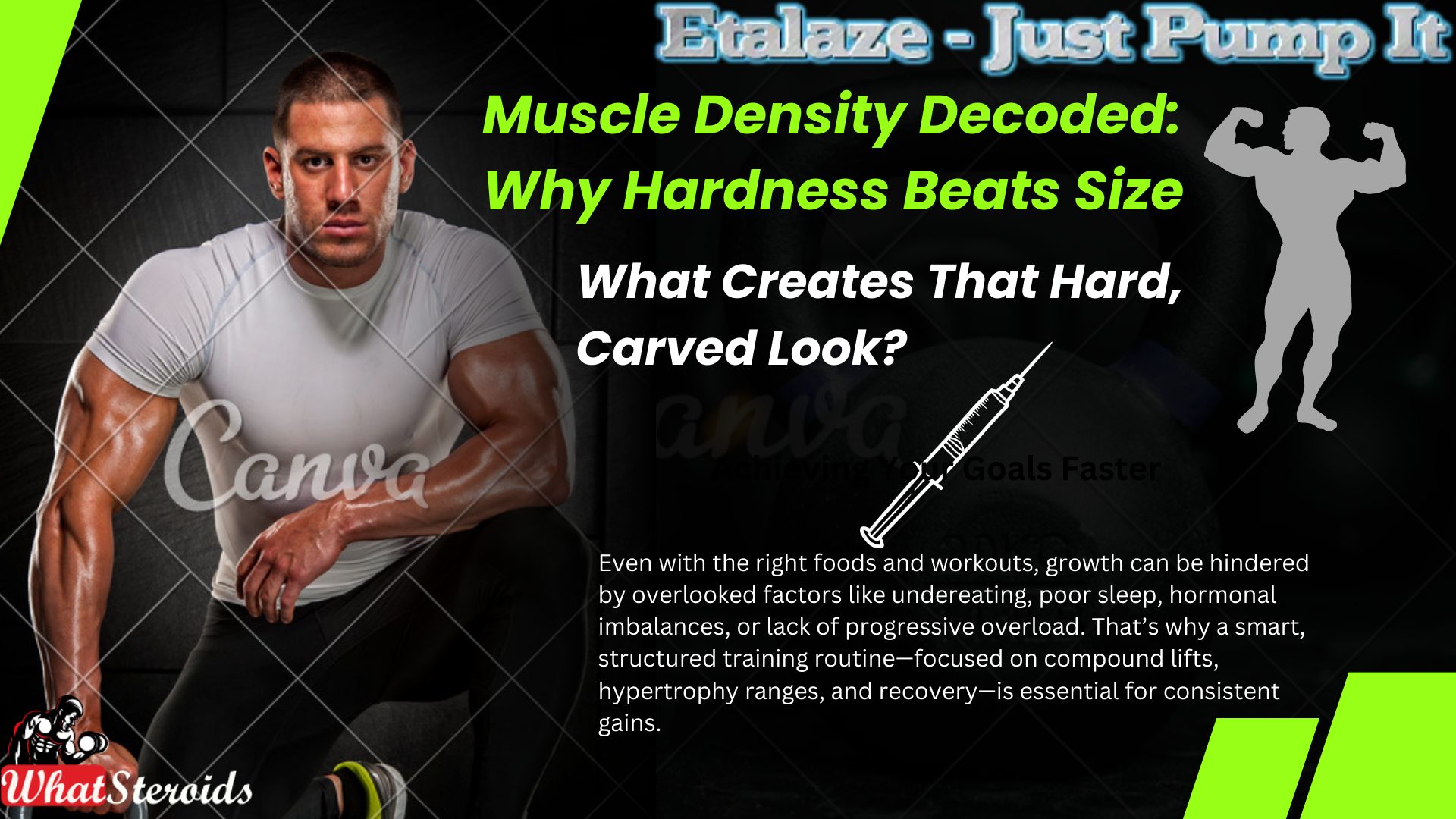
Two athletes might share the same weight and measurements, yet look worlds apart. One has a soft, swollen appearance; the other looks sculpted, dry, and rock-solid. What sets them apart isn’t just body fat—it’s muscle density, often referred to as the “dry look.”
This refined aesthetic is the result of years of focused training, strategic nutrition, and hormonal balance. It’s not just about getting big—it’s about building mature, tightly packed muscle fibers with minimal water retention and fat.
What Creates That Hard, Carved Look?
The “dry” physique is defined by:
- Thick, contractile muscle tissue built over time
- Minimal subcutaneous water and intramuscular fat
- Thin, tight skin that wraps around lean muscle
- Often seen in veteran lifters and those using low-estrogen compounds
This is the grainy, etched look that separates seasoned athletes from casual gym-goers.
Related Article: Sleeping Positions for Effective Muscle Recovery
Why Big Doesn’t Always Mean Hard
Muscle size can come from:
- Myofibrillar hypertrophy (actual muscle fiber growth)
- Sarcoplasmic hypertrophy (fluid, glycogen, and mitochondrial expansion)
- Inflammation and pump from high-volume training
Estrogen-related water retention
So yes, someone can look large but lack definition—especially during bulking phases or after using “wet” compounds.
What Influences Muscle Hardness?
Here’s what really shapes that dense, dry look:
Training Style & Experience
Heavy, progressive lifting builds deeper, denser muscle over time.
Years of consistent tension—not just high-rep pumps—create lasting density.
Water Retention
Hormones like estrogen and aldosterone affect fluid retention.
Compounds like Testosterone, Dianabol, Anadrol can cause bloating.
DHT-based drugs (e.g., Masteron, Winstrol, Proviron) help achieve a tighter, drier look.
Body Fat & Skin Thickness
Even small fat deposits can blur definition.
Some areas (glutes, lower back) naturally retain more fat or water.
Glycogen & Inflammation
High-carb meals or refeeds can make muscles look full but smooth.
Overtraining can cause inflammation and puffiness—hence why legs are often skipped pre-contest.
 Check Out CJ-Tech 10 Vials by BodyTech
How to Sculpt a Dense, Dry Physique
Want to look carved instead of just big? Here’s your blueprint:
Lift heavy over time: Stick to 5–10 rep ranges and compound movements. Think years, not weeks.
Manage estrogen: Use aromatase inhibitors or DHT-based compounds if cycling.
Cut fat gradually: Avoid crash diets—preserve lean mass while shedding water and fat.
Use hardening agents wisely: Masteron, Winstrol, Tren, and Proviron can enhance tightness—but only short-term.
Flush excess water: Reduce sodium slowly and consider natural diuretics like caffeine or dandelion root.
Muscle Hardness Is Earned, Not Inflated
True muscle density comes from years of heavy lifting, hormonal control, and smart conditioning. It’s not just about size—it’s about structure, definition, and the discipline to build a physique that looks carved from stone.
For aspiring bodybuilders aiming to sculpt lean, dense muscle, the path to success lies in a smart combination of nutrient-rich superfoods and responsible supplementation. While training intensity and consistency are non-negotiable, what you fuel your body with can dramatically influence your gains, recovery, and overall physique.
Superfoods That Build Muscle From the Inside Out
Superfoods are nature’s performance enhancers—packed with essential nutrients that support muscle growth, reduce inflammation, and improve recovery.
Eggs: A complete protein source rich in leucine, which triggers muscle protein synthesis. The yolk also contains healthy fats and vitamins like B12 and D.
Salmon: Loaded with omega-3 fatty acids and high-quality protein, salmon supports joint health and reduces post-training inflammation.
Quinoa: A plant-based complete protein, quinoa is also high in magnesium and iron—key minerals for energy production and muscle function.
Greek Yogurt: Combines fast-digesting whey and slow-digesting casein proteins, making it ideal for both post-workout recovery and overnight muscle repair.
Spinach & Kale: Rich in antioxidants, iron, and nitrates, these greens improve blood flow and endurance while supporting overall health.
Pumpkin Seeds & Almonds: Great sources of magnesium, zinc, and healthy fats. They help regulate testosterone and support muscle contraction.
Oats: A slow-digesting carb that fuels long workouts and replenishes glycogen stores without spiking insulin.
These superfoods should form the backbone of a bodybuilder’s diet—providing clean energy, quality protein, and the micronutrients needed for optimal performance.
Steroid Supplements: What to Know and Use Responsibly
For those considering performance-enhancing drugs (PEDs), it’s essential to understand both the benefits and risks. Steroid supplements can accelerate muscle growth, but they must be used with caution and under professional guidance.
Testosterone: The foundational anabolic steroid. It boosts protein synthesis, strength, and recovery. However, it can cause water retention and estrogen-related side effects if not managed properly.
DHT-Based Compounds (e.g., Masteron, Proviron, Winstrol): These promote a dry, hard look by reducing water retention and enhancing muscle definition. They’re often used during cutting phases.
Trenbolone: Known for its powerful anabolic effects and ability to build dense muscle. It’s not for beginners and carries significant risks if misused.
Aromatase Inhibitors: Used to control estrogen levels during a cycle, helping prevent bloating and gynecomastia.
Cycle Support Supplements: Products like ZMT, DHEA, Krill Oil, and liver support formulas are essential to protect hormonal balance, joint health, and organ function during steroid use.
It’s crucial to cycle responsibly, monitor blood work, and prioritize post-cycle therapy (PCT) to restore natural hormone levels and maintain gains.
Build Smart, Not Just Big
Upcoming bodybuilders should focus on whole superfoods like eggs, salmon, quinoa, and Greek yogurt to fuel natural growth. If using steroids, opt for drying agents and cycle support supplements to sculpt a hard, defined physique—always with caution and expert oversight. Gains are earned through discipline, not shortcuts.
Is Clean Eating and Weights Enough to Build Muscle?
Even with a clean diet and consistent training, several hidden factors can stall muscle growth. It’s not always about effort—it’s about strategy, recovery, and hormonal balance.
1. Undereating Without Realizing It
Eating “healthy” doesn’t always mean eating enough. Many lifters unknowingly stay in a caloric deficit, especially if they’ve dieted before or fear gaining fat. Muscle growth demands a caloric surplus—extra energy to build new tissue. Without it, the body may use protein for fuel instead of repair.
2. Lack of Progressive Overload
Muscles grow in response to increasing stress. If your workouts become routine—same weights, same reps—your body adapts and stops growing. You need to gradually increase resistance, intensity, or volume to stimulate hypertrophy.
3. Poor Recovery & Sleep
Muscle isn’t built in the gym—it’s built during rest. Inadequate sleep disrupts growth hormone and testosterone production, both critical for muscle repair. Overtraining without rest can also lead to inflammation and muscle breakdown.
4. Hormonal Imbalances
Elevated cortisol from stress or poor sleep can hinder growth. Low testosterone levels—due to age, lifestyle, or medical issues—can also reduce protein synthesis and recovery capacity.
5. Alcohol, Smoking, and Inflammation
Nicotine and alcohol impair nutrient delivery, reduce testosterone, and increase cortisol. They also interfere with recovery and protein absorption, making gains harder to achieve.
Gains Require More Than Just Clean Eating and Lifting
To grow muscle, you need enough calories, progressive training, quality sleep, and hormonal balance. Even the cleanest diet won’t help if you’re under-eating, stuck in a training plateau, or neglecting recovery. Building muscle is a full-body commitment—inside and out.
 Click Here to Buy Bio ACE 60 Tabs by Blackmores
Muscle Mass and Competitive Bodybuilding
In bodybuilding competitions, size alone doesn’t win titles. Judges look for a combination of:
Muscle Mass: Full, well-developed muscles across all groups
Muscle Density: Hard, grainy texture that reflects maturity and conditioning
Symmetry & Proportion: Balanced physique with no overpowering or lagging areas
Definition: Clear separation between muscles, minimal water retention
Stage Presence: Posing, confidence, and ability to showcase physique
While mass creates visual impact, muscle toughness (density) is what gives the physique that “carved from stone” look. It’s often the result of years of heavy lifting, low body fat, and tight skin over lean tissue.
In short: size gets attention, but density wins judges. The most successful competitors combine both—mass with refinement.
To build serious muscle mass and compete with confidence, you need a training routine that emphasizes hypertrophy, progressive overload, and strategic recovery. Here's a proven structure that many bodybuilders use to pack on size while refining muscle quality:
Recommended Training Routine for Muscle Mass
Weekly Split (5–6 Days)
This split targets each muscle group with enough volume and frequency to stimulate growth:
| Day | Focus |
| Monday | Chest + Triceps |
| Tuesday | Back + Biceps |
| Wednesday | Legs (Quads + Hams) |
| Thursday | Shoulders + Abs |
| Friday | Arms (Isolation) |
| Saturday | Full-body pump |
| Sunday | Rest/Active Recovery |
Overall
Building a powerful, aesthetic physique isn’t just about lifting weights or eating clean—it’s a multidimensional journey that blends nutrition, training, recovery, and hormonal balance. We’ve explored how slim individuals can leverage superfoods like eggs, salmon, quinoa, and Greek yogurt to fuel lean muscle growth, and how strategic use of supplements and PEDs—when approached responsibly—can enhance definition and density.
We’ve also broken down the science behind muscle hardness vs. size, revealing that true stage dominance comes not just from bulk, but from grainy, mature muscle with minimal water retention. In bodybuilding, density and conditioning often trump sheer volume, especially under the scrutiny of competition judges.
Even with the right foods and workouts, growth can be hindered by overlooked factors like undereating, poor sleep, hormonal imbalances, or lack of progressive overload. That’s why a smart, structured training routine—focused on compound lifts, hypertrophy ranges, and recovery—is essential for consistent gains.
Ultimately, the path to a sculpted physique is a long game. It demands discipline, patience, and a deep understanding of how your body responds to stress, fuel, and rest. Whether you're just starting out or prepping for a show, the goal isn’t just to get bigger—it’s to build quality muscle that performs, lasts, and commands attention.


Is Training/Lifting Barefoot A Good Idea? Find Out

Using Insulin Needles to Inject AAS: Pros and Cons

Is NAD+ The Best Anti-aging Molecule for Men Over 40?

Estrogen Management: SERMs and AIs Compared

The Testosterone Trap: Why Bigger Levels Don’t Guarantee Bigger Muscles

Sodium, Potassium, and Pump: The Science Behind Electrolytes Balance in Bodybuilding

Reclaiming Balance: A Bodybuilder’s Guide to Post-Cycle Crash Recovery

Healing Peptides in Focus: BPC-157 vs TB-500 for Injury Recovery

Tiny Doses, Big Impact: The PED Revolution

The Neurofitness Connection: How Exercise Fuels Brain Development

Burn Fat, Build Muscle: The Truth About HGH in Bodybuilding
The Neurofitness Connection: How Exercise Fuels Brain Development

Muscle Density Decoded: Why Hardness Beats Size
Healing Peptides in Focus: BPC-157 vs TB-500 for Injury Recovery
Sodium, Potassium, and Pump: The Science Behind Electrolytes Balance in Bodybuilding
Reclaiming Balance: A Bodybuilder’s Guide to Post-Cycle Crash Recovery
Tiny Doses, Big Impact: The PED Revolution
Estrogen Management: SERMs and AIs Compared
The Testosterone Trap: Why Bigger Levels Don’t Guarantee Bigger Muscles
Is NAD+ The Best Anti-aging Molecule for Men Over 40?
Burn Fat, Build Muscle: The Truth About HGH in Bodybuilding
The Neurofitness Connection: How Exercise Fuels Brain Development
Muscle Density Decoded: Why Hardness Beats Size
Healing Peptides in Focus: BPC-157 vs TB-500 for Injury Recovery
Sodium, Potassium, and Pump: The Science Behind Electrolytes Balance in Bodybuilding
Reclaiming Balance: A Bodybuilder’s Guide to Post-Cycle Crash Recovery
Tiny Doses, Big Impact: The PED Revolution
Estrogen Management: SERMs and AIs Compared
The Testosterone Trap: Why Bigger Levels Don’t Guarantee Bigger Muscles
Is NAD+ The Best Anti-aging Molecule for Men Over 40?
-
 Bodybuilding Products2 years ago
Telmisartan In Bodybuilding: An Expert’s Advice
-
 Steroids2 years ago
Anadrol Cycle: Benefits, Doses, Alternatives, etc.
-

 Anabolic Steroids1 year ago
Joint Stiffness: How to Manage It While on AAS
-
 Bodybuilding1 year ago
Primal Movements: Our Ultimate Guide for Maximum Results
-
 Bodybuilding1 year ago
How Effective is Bone Broth for Recovery?
-

 Steroids1 year ago
Bodybuilder Winter Clothing: Staying Warm and Stylish
-
 Steroids1 year ago
Omnitope (Oxytocin)
-
 Steroids1 year ago
Sleeping Positions for Effective Muscle Recovery
-
 Bodybuilding2 years ago
How Much Is Too Much Cardio? Understanding Heart Rate Zones
-
 Steroids12 months ago
Ostarine For Beginners: The Ultimate Guide
-
 Bodybuilding1 year ago
2nd Edition of Natural Bodybuilding Competition Facts
-
 Bodybuilding1 year ago
Are Nootropics a Better Option to AAS?
-

 Bodybuilding1 year ago
Top Video Games for Bodybuilders in 2025
-
 Bodybuilding2 years ago
Demystifying Hypertrophy Training
-

 Steroids11 months ago
Tips on How to Store Peptides and HGH
-
 Steroids9 months ago
Raloxifene (Evista) 101: A Non-Surgical Solution for Gyno
-

 Steroids10 months ago
Why Post-Cycle Therapy (PCT) Fails After a Nandrolone Cycle
-

 Beginners1 year ago
14 Morning Run Safety Tips for Bodybuilding and Fitness
-
 Steroids9 months ago
Creatine vs Myostatin: An Expert’s Analysis
-

 Steroids1 year ago
Glutathione – The Most Underrated Antioxidant
-

 Bodybuilding2 years ago
List of FDA-Approved Peptides
-

 Product Reviews2 years ago
Top Vitamins for Skin Health
-
 Anabolic Steroids2 years ago
How Much Do You Know About B-AET? A Fat Burner You’ve Been Missing
-
 Bodybuilding1 year ago
Hormone Replacement Therapy (TRT) Cycle Guide
-

 Anabolic Steroids2 years ago
Anavar Cycle for Men and Women